
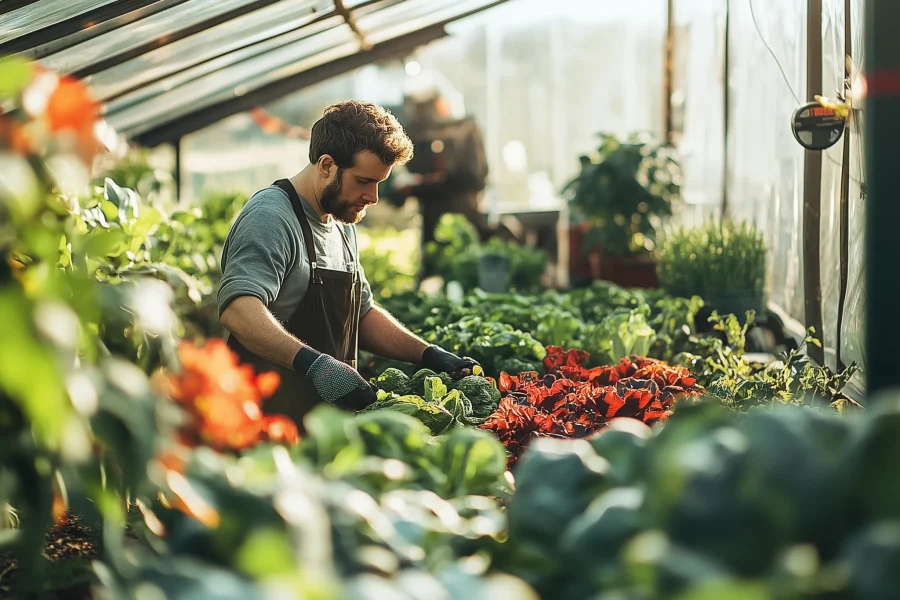
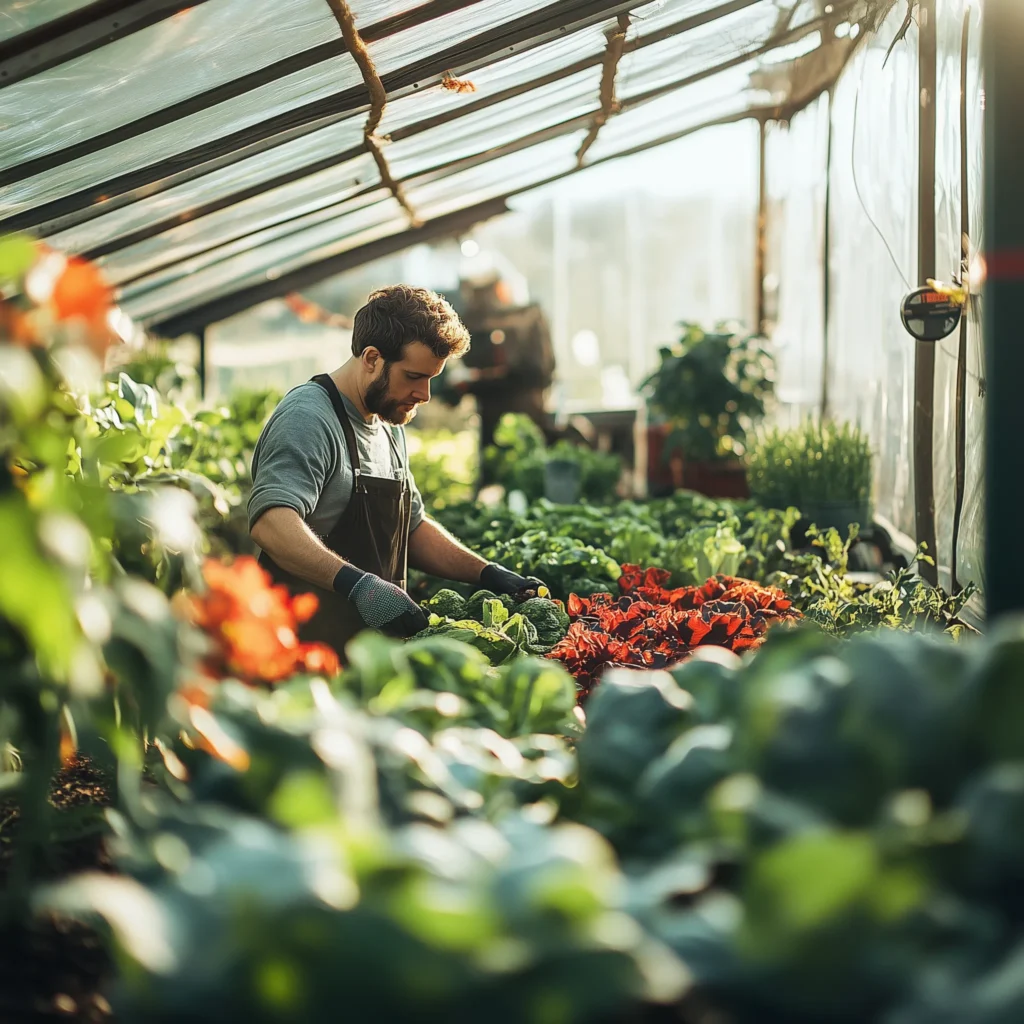
For growers looking to maximize plant health and productivity, carbon dioxide (CO₂) supplementation has become one of the most effective and natural methods of increasing greenhouse yields. While light, water, and nutrients are critical for growth, plants rely on CO₂ as the building block of photosynthesis. When levels are elevated in a controlled greenhouse environment, crops often grow faster, stronger, and more abundantly.
A+ Heler’s provides high-quality CO₂ solutions for growers in Madison, WI, and surrounding areas who want to optimize greenhouse conditions and take their harvests to the next level. By supplying beverage-grade CO₂, which exceeds food-grade standards, A+ Heler’s ensures growers receive pure, reliable carbon dioxide that supports both crop performance and peace of mind.
This article explores the science behind CO₂ in plant growth, how it enhances yields, and best practices for greenhouse application.
Why CO₂ Matters for Plant Growth
Plants use photosynthesis to convert light energy, water, and carbon dioxide into sugars and oxygen. In many greenhouse environments, light and water are carefully managed, but CO₂ levels can actually become limiting.
- Natural air contains about 400 ppm of CO₂. In enclosed spaces like greenhouses, this concentration may fall as plants consume CO₂ throughout the day.
- Optimal CO₂ levels for growth are often 800–1,200 ppm. By enriching the environment to these levels, growers can stimulate faster photosynthesis, resulting in stronger vegetative growth and larger yields.
- Faster growth cycles mean earlier harvests. Some growers report crops reaching maturity days or weeks ahead of schedule with consistent CO₂ supplementation.
In short, CO₂ is often the hidden factor holding back potential yield in greenhouses. With the right management, it can become a powerful tool for maximizing productivity.
Benefits of CO₂ Enrichment in Greenhouses
Growers who supplement CO₂ see a variety of benefits that go beyond just higher yields.
- Increased Crop Yields
Studies have shown that CO₂ enrichment can increase crop yields by 20–30% in many cases, depending on the plant species. Vegetables, flowers, and herbs all respond positively when provided with sufficient CO₂ during peak light hours. - Faster Growth Rates
With more CO₂ available, plants convert light into energy more efficiently. This speeds up growth cycles, allowing for quicker harvests and potentially more crop rotations per year. - Improved Plant Quality
Enriched CO₂ levels can lead to stronger stems, larger leaves, and more vibrant flowers. For fruiting crops, this can also translate into larger fruit sizes and improved quality. - Better Stress Tolerance
Plants grown under optimal CO₂ conditions may be more resilient against certain stresses, such as heat or mild drought, since photosynthesis efficiency is improved. - Maximized Use of Greenhouse Investment
Greenhouses are built to optimize growing conditions, but if CO₂ is overlooked, plants may never reach their full potential. Supplementation ensures every element — from lighting to irrigation — contributes to maximum productivity.
How to Use CO₂ for Greenhouse Yield Enhancement
To achieve consistent results, growers should consider the best practices for CO₂ supplementation:
- Timing Matters
CO₂ enrichment is most effective during daylight hours when photosynthesis is occurring. Supplementing CO₂ at night is unnecessary, as plants do not photosynthesize without light. - Distribution Systems
CO₂ can be introduced into greenhouses using a variety of systems, including:- CO₂ cylinders: An accessible option for small- to medium-scale growers, offering controlled release.
- Burners: Some growers use propane or natural gas burners, though these require monitoring for byproducts.
- Tubing networks: To ensure even distribution, many systems use perforated tubing placed throughout the greenhouse.
- CO₂ cylinders: An accessible option for small- to medium-scale growers, offering controlled release.
- A+ Heler’s specializes in supplying CO₂ cylinders and can advise on safe, effective distribution strategies tailored to each greenhouse.
- Monitoring and Control
To avoid over- or under-supplementing, growers should use CO₂ monitors and controllers. Maintaining levels around 800–1,200 ppm during peak photosynthesis hours is generally recommended. - Ventilation Considerations
Greenhouses require ventilation to control temperature and humidity, but this can cause CO₂ levels to drop quickly. Coordinating CO₂ supplementation with ventilation cycles ensures more efficient use. - Safety Precautions
While CO₂ is not toxic in typical growing ranges, very high levels can displace oxygen in enclosed spaces. Proper ventilation and monitoring protect both workers and plants.
Which Crops Benefit the Most?
While nearly all greenhouse crops respond positively to CO₂ enrichment, some show especially strong improvements:
- Tomatoes: Higher yields, larger fruit sizes, and earlier harvests.
- Lettuce and leafy greens: Faster growth and greater leaf mass.
- Cucumbers and peppers: Increased yields and improved fruit uniformity.
- Flowers and ornamentals: Enhanced color vibrancy and bloom size.
- Herbs: Denser growth and stronger aroma profiles.
The degree of benefit depends on crop type, light intensity, and overall greenhouse management, but across the board, growers report positive outcomes.
Common Questions About CO₂ in Greenhouses
How much CO₂ do I need?
The amount depends on greenhouse size, crop type, and target ppm levels. Many growers find that raising CO₂ from 400 ppm (ambient) to 1,000 ppm provides excellent results without wasting resources.
Will CO₂ enrichment work without supplemental lighting?
CO₂ is most effective when paired with high light intensity. In low-light conditions, the benefits may be limited. For greenhouses with supplemental lighting, CO₂ enrichment can be especially powerful.
Is CO₂ enrichment cost-effective?
Yes. Many growers find that the return in crop yields outweighs the cost of CO₂. With beverage-grade CO₂ from a reliable supplier like A+ Heler’s, growers can also trust the purity and consistency of their investment.
Why Beverage-Grade CO₂ Matters for Growers
Just as with dry ice, not all CO₂ is created equal. A+ Heler’s supplies beverage-grade CO₂, which meets higher purity standards than industrial alternatives. For growers, this provides:
- Clean, contaminant-free CO₂ that won’t introduce impurities into the greenhouse.
- Consistency that ensures reliable enrichment and predictable crop outcomes.
- Peace of mind knowing the same quality of CO₂ trusted by breweries and beverage producers is being used in their operation.
With food crops especially, quality and purity are non-negotiable. Beverage-grade CO₂ ensures growers provide the healthiest, safest products to consumers.
Case Example: Boosting Lettuce Production
Consider a mid-sized greenhouse growing lettuce year-round in Madison, WI. Without CO₂ supplementation, the grower was seeing steady but average yields. After introducing beverage-grade CO₂ cylinders and maintaining levels around 1,000 ppm during the day, the grower reported:
- Harvest cycles shortened by several days.
- Lettuce heads were denser and more uniform.
- Overall yield increased by nearly 25% within the first season.
This type of success story is common among growers who adopt CO₂ enrichment, especially when supported by a reliable local supplier.
Working with A+ Heler’s for Greenhouse CO₂
As a trusted CO₂ provider in Madison, A+ Heler’s understands the needs of local growers. By offering beverage-grade CO₂ and personalized service, the company helps greenhouses achieve higher yields while ensuring safety and compliance.
Benefits of working with A+ Heler’s include:
- Local reliability: Quick access to CO₂ without depending on distant suppliers.
- Flexible supply options: Cylinders and refill services to match each greenhouse’s size and frequency of use.
- Expert guidance: Advice on safe handling, storage, and distribution systems.
- Commitment to quality: Only the highest-purity CO₂ is provided, ensuring clean results for food production.
Conclusion
For growers seeking to boost greenhouse yields naturally, CO₂ supplementation is one of the most effective tools available. By elevating CO₂ levels into the optimal range, plants photosynthesize more efficiently, grow faster, and produce more abundant harvests. When paired with good light, water, and nutrient management, CO₂ enrichment allows greenhouses to operate at their full potential.
With A+ Heler’s beverage-grade CO₂, growers in Madison and beyond have access to a safe, reliable, and high-quality source of carbon dioxide tailored to their needs. From vegetables to flowers, herbs to fruits, CO₂ for greenhouse yield enhancement offers a natural way to maximize both quality and profitability.
