
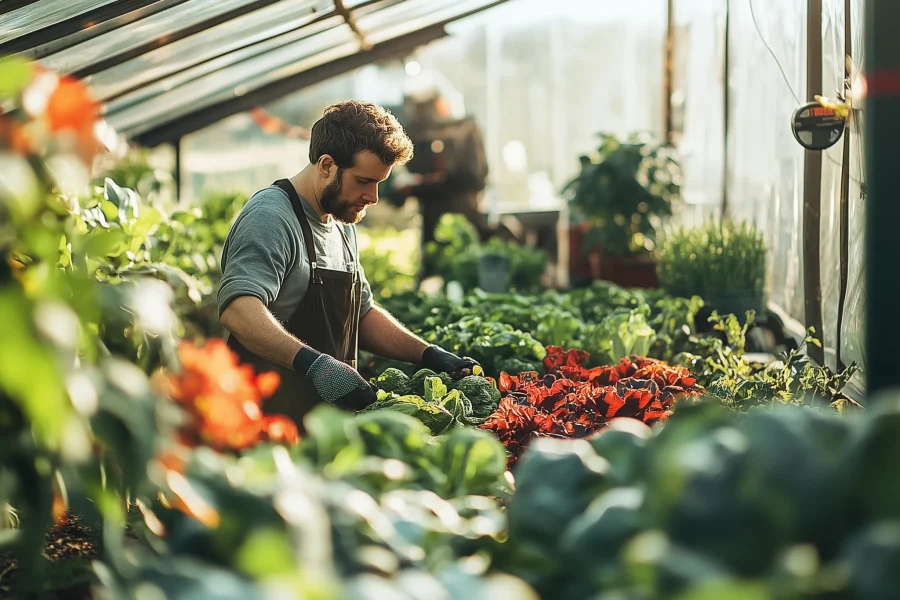
Large-scale agricultural operations depend on consistency. Whether managing controlled-environment greenhouses, food-adjacent production, research agriculture, or post-harvest handling, disruptions in CO₂ or dry ice supply can quickly translate into lost yield, compromised quality, or operational downtime.
Unlike smaller operations, commercial agricultural facilities don’t have the luxury of improvising when inputs fall short. CO₂ and dry ice function as infrastructure, not optional add-ons. Managing continuity, safety, and compliance across these inputs requires deliberate planning—and a supplier that understands commercial agriculture at scale.
This article breaks down how large agricultural operations manage CO₂ and dry ice supply effectively, where common failures occur, and why working with a trusted local provider like A+ Heler’s Dry Ice & CO₂ plays a critical role in long-term reliability.
Why CO₂ and Dry Ice Are Mission-Critical in Commercial Agriculture
In modern agriculture, CO₂ and dry ice serve distinct but equally important functions.
CO₂ is commonly used to support plant growth in controlled environments, regulate oxygen levels during storage, and assist with food-adjacent agricultural processes. Dry ice supports temperature control, cold chain continuity, and specialized handling during transport, storage, or sanitation-related activities.
At scale, interruptions in either input can create cascading problems:
- Reduced yields or inconsistent crop performance
- Temperature excursions during handling or transport
- Downtime while waiting for resupply
- Increased safety and compliance risk
Commercial agricultural operators often discover that supply problems don’t come from lack of demand—but from poor continuity planning.
Continuity Planning: Treating Supply as Infrastructure
One of the most common mistakes large agricultural operations make is treating CO₂ and dry ice as short-term consumables rather than long-term operational inputs.
Continuity planning means accounting for:
- Seasonal demand fluctuations
- Peak production cycles
- Weather-related disruptions
- Equipment maintenance or downtime
- Emergency scenarios
Operations that rely on ad-hoc ordering often struggle when conditions change. In contrast, facilities that work with a dedicated commercial supplier like A+ Heler’s approach CO₂ and dry ice the same way they treat utilities: planned, predictable, and resilient.
Many agricultural teams start by reviewing how CO₂ supports plant performance through greenhouse yield enhancement services and how dry ice fits into their broader operational workflows.
Managing CO₂ Supply Across Large Agricultural Facilities
For greenhouses and controlled-environment agriculture, CO₂ availability directly affects consistency and yield. Fluctuations in CO₂ levels can lead to uneven growth, reduced output, and wasted inputs.
Large-scale operations face unique CO₂ challenges, including:
- Coordinating refill schedules across multiple zones
- Ensuring cylinder integrity and maintenance
- Preventing supply gaps during peak growth periods
- Maintaining safe handling and monitoring practices
A+ Heler’s supports agricultural operations through refill-only, high-purity CO₂ services, helping facilities maintain consistent supply without relying on unpredictable delivery chains. Their approach prioritizes operational reliability and safety, especially for customers managing large volumes over extended periods.
Agricultural teams often work directly with CO₂ services providers that understand the demands of commercial-scale growth environments rather than small, intermittent use.
Dry Ice in Agricultural Operations: Beyond Shipping
While dry ice is commonly associated with shipping, large agricultural operations use it in a variety of critical ways. These may include:
- Temperature stabilization during harvest handling
- Cold chain support for agricultural products in transit
- Emergency temperature control during equipment failures
- Sanitation and maintenance support in food-adjacent environments
At scale, dry ice demand can spike unexpectedly. Weather events, mechanical issues, or downstream delays can all require rapid access to dry ice to protect product integrity.
A+ Heler’s produces high-density, beverage-grade dry ice locally in Madison, which reduces sublimation loss and supports same-day availability. For agricultural operations, this local production model helps ensure dry ice is available when continuity matters most.
Many facilities integrate dry ice planning into their operations by working with dry ice services designed for commercial users rather than retail demand.
Storage, Handling, and Sublimation Loss
Even with reliable supply, improper storage can undermine continuity. Dry ice sublimates continuously, and CO₂ cylinders require proper handling and inspection to remain safe and effective.
Common challenges in large agricultural settings include:
- Inadequate insulated storage for dry ice
- Overstocking that leads to unnecessary loss
- Improper cylinder handling or storage conditions
- Limited staff training across large teams
High-volume users often address these issues by standardizing storage procedures and aligning supply schedules with actual usage patterns. Facilities that require larger quantities often rely on bulk dry ice to better control volume, timing, and loss.
A+ Heler’s works with agricultural customers to help align ordering, storage, and handling practices with real-world operational needs.
Safety and Compliance in Agricultural Environments
Safety and compliance are non-negotiable in large-scale agricultural operations. CO₂ and dry ice both require careful management to protect employees and facilities.
Key safety considerations include:
- Adequate ventilation in storage and use areas
- CO₂ monitoring in enclosed environments
- Clear handling and transport procedures
- Employee training across shifts and teams
Because CO₂ can displace oxygen and dry ice sublimates into gas, agricultural operations must integrate safety planning into daily workflows. A+ Heler’s supports this effort by maintaining clear operational standards and providing access to documented safety information and verified certifications.
For operations subject to audits or third-party oversight, working with a supplier experienced in regulated environments reduces risk and simplifies compliance.
Avoiding Supply Failures During Peak Demand
Large agricultural operations are especially vulnerable to supply disruptions during peak seasons. Demand often increases precisely when transportation delays, weather disruptions, or supplier constraints are most likely.
Facilities that avoid these failures tend to:
- Forecast demand conservatively
- Build buffer capacity into supply planning
- Maintain strong communication with their supplier
- Prioritize local production over long-haul sourcing
A+ Heler’s local Madison-based production model allows agricultural customers to adapt quickly when conditions change. Same-day availability and flexible pickup options help operations maintain continuity without overstocking or relying on distant suppliers.
Many agricultural teams review industry applications to understand how other commercial users structure their supply strategies across similar operational constraints.
Supporting Growth Without Creating Bottlenecks
As agricultural operations expand, CO₂ and dry ice demand often increases faster than expected. New greenhouse zones, higher output targets, or expanded distribution all place additional pressure on supply infrastructure.
Warning signs that supply is becoming a bottleneck include:
- Frequent emergency orders
- Difficulty securing sufficient volume
- Increased waste from rushed storage decisions
- Supplier hesitation when demand spikes
A+ Heler’s works proactively with commercial agricultural customers to align production capacity with growth plans. This forward-looking approach helps facilities scale without introducing hidden vulnerabilities into their operations.
Why Supplier Experience Matters in Agriculture
Not all CO₂ and dry ice suppliers understand agricultural environments. Large-scale operations benefit from working with partners that:
- Support commercial, not retail, demand
- Understand seasonal variability
- Prioritize safety and compliance
- Offer consistent, high-purity products
- Produce locally to minimize disruption
A+ Heler’s brings experience across agriculture, food, research, and industrial sectors, allowing them to support complex operations where continuity matters.
Talk to a Local Expert Before Problems Happen
Managing CO₂ and dry ice supply across large-scale agricultural operations requires more than reactive ordering. It demands planning, safety awareness, and a supplier that understands commercial realities.
Before supply issues disrupt yield, safety, or compliance, the most effective step is a conversation. Speaking with a local expert at A+ Heler’s Dry Ice & CO₂ can help identify risks, improve continuity planning, and ensure your operation has the support it needs as demands change.
Many agricultural teams begin by reviewing available CO₂ services and dry ice services or by starting a direct conversation through Get a Quote to align supply with real-world operational needs.
