
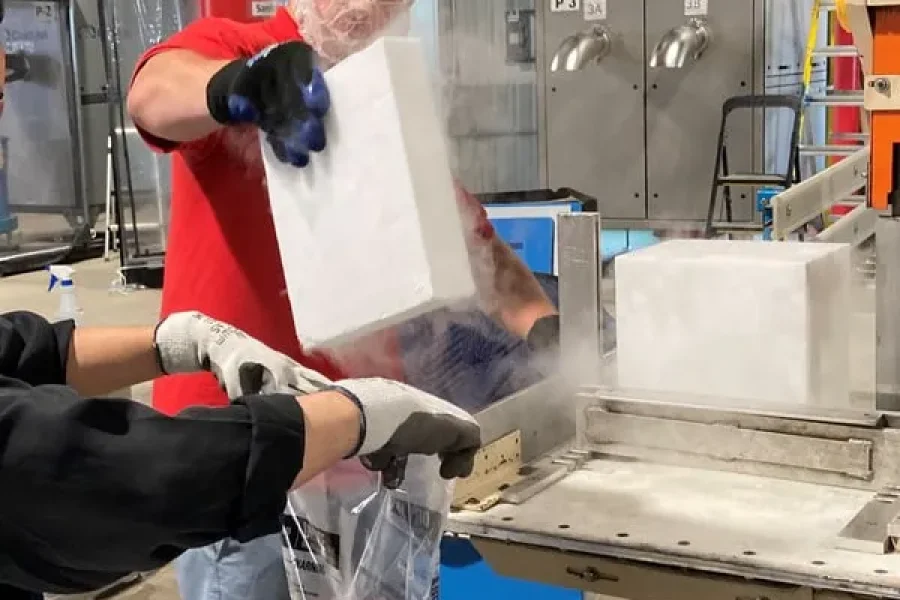
For procurement teams and operations executives, vendor selection is never just about price. When dry ice supports mission-critical functions—manufacturing uptime, cold chain continuity, regulated production, sanitation windows, or emergency response—the supplier becomes part of operational infrastructure.
Yet many organizations still evaluate dry ice vendors using commodity-style purchasing criteria. That approach may work for occasional, low-volume use. It fails in enterprise environments where volume, continuity, compliance, and scalability are non-negotiable.
This guide outlines how enterprise procurement teams should evaluate dry ice suppliers for mission-critical industrial contracts—and why working with a transparent, production-capable partner like A+ Heler’s Dry Ice & CO₂ makes a measurable difference.
Why Industrial Dry Ice Is Not a Commodity
At surface level, dry ice appears standardized. It’s solid CO₂. However, in commercial-scale operations, meaningful differences exist in:
- Pellet density and consistency
- Production freshness
- Supply chain reliability
- Response capacity
- Compliance documentation
For manufacturing plants, food processors, distribution hubs, pharmaceutical production, and industrial cleaning contractors, dry ice performance and availability directly impact operations.
When a supplier cannot deliver consistent volume—or when quality fluctuates—production timelines and compliance exposure increase. This is why industrial dry ice procurement must go beyond unit pricing.
Organizations often begin evaluation by reviewing core dry ice services to understand production capability rather than assuming all suppliers operate at the same level.
Vendor Vetting: What Procurement Should Actually Examine
Enterprise procurement teams should evaluate dry ice suppliers across five critical categories:
1. Production Capability
Is the supplier a producer or a reseller?
Resellers depend on third-party production. That creates vulnerability during peak demand. Producers control their output and can scale more predictably.
A+ Heler’s operates as a local Madison-based producer. That distinction matters for mission-critical contracts where availability cannot rely on external supply chains.
2. Volume Scalability
Can the supplier increase output during seasonal spikes or emergency needs?
Industrial environments require scalable capacity. Procurement teams should verify:
- Daily production limits
- Expansion capability
- Historical performance during peak periods
For organizations requiring large quantities, structured bulk dry ice capability is essential.
3. Geographic Advantage
Where is production located relative to your facilities?
Dry ice sublimates continuously. Long transportation routes reduce usable volume and increase variability. Regional production reduces risk and improves consistency.
For Wisconsin and surrounding regions, A+ Heler’s local production minimizes sublimation loss and supports same-day access when operational urgency arises.
4. Industry Experience
Has the supplier worked in regulated or high-volume industrial environments?
Suppliers supporting industries such as food production, manufacturing, logistics, and industrial cleaning understand compliance expectations and operational pressures. Reviewing broader industry applications provides insight into supplier capability across sectors.
5. Transparency and Communication
Can the supplier clearly explain production methods, storage practices, and contingency planning?
Transparency builds trust. Industrial contracts require visibility into supply chain reliability—not assumptions.
Capacity Verification: Beyond Sales Promises
One of the most common procurement errors is accepting verbal capacity assurances without verification.
Enterprise-level evaluation should include:
- Documentation of production capacity
- Clarification on peak output thresholds
- Emergency response protocols
- Backup production or redundancy plans
A+ Heler’s differentiates itself by operating production locally and engaging directly with commercial clients to align capacity with real operational needs.
For mission-critical contracts, procurement teams should request realistic assessments of expected volume and surge scenarios. Reliable suppliers welcome this level of scrutiny.
Production Transparency and Quality Consistency
Industrial environments require consistency. Variability in pellet size, density, or freshness can affect:
- Industrial cleaning performance
- Temperature stabilization effectiveness
- Maintenance scheduling
- Compliance documentation
Production transparency includes:
- Clear explanation of manufacturing processes
- Handling and storage standards
- Quality control procedures
A+ Heler’s produces high-density, beverage-grade dry ice, exceeding standard food-grade purity. For regulated industries, purity standards matter—not only for safety, but for audit readiness.
Organizations operating in food-adjacent or regulated environments often align supplier selection with food industry services or similar sector-specific experience to ensure compliance alignment.
Evaluating Emergency Response Capability
Mission-critical contracts must account for the unexpected. Refrigeration failures, equipment shutdowns, contamination events, or demand spikes can all require rapid dry ice access.
Procurement teams should evaluate:
- Same-day availability
- Pickup flexibility
- Communication escalation protocols
- Surge production capability
Because A+ Heler’s produces locally, emergency response is not dependent on long-haul transportation. That responsiveness reduces downtime exposure in high-stakes environments.
Enterprises that build dry ice into emergency infrastructure planning often initiate structured supply discussions through Get a Quote to formalize capacity alignment.
Compliance and Documentation Standards
Industrial contracts frequently require supplier documentation for audits, insurance verification, and regulatory compliance.
Procurement teams should confirm access to:
- Safety documentation
- Handling guidelines
- Storage recommendations
- Verified certifications
A+ Heler’s provides detailed safety information and documented certifications, supporting regulated industries that must demonstrate due diligence.
For operations executives, supplier documentation is not optional—it is foundational to risk mitigation.
Multi-Facility and Enterprise Coordination
Large organizations often operate across multiple plants or distribution hubs. Evaluating dry ice suppliers at the enterprise level includes assessing their ability to coordinate across facilities.
Key considerations include:
- Consistent quality across locations
- Centralized procurement coordination
- Standardized pricing structures
- Scalable volume commitments
A+ Heler’s works with commercial clients to align supply planning across facilities, reducing fragmentation and simplifying vendor management.
Vendor consolidation improves forecasting accuracy and strengthens long-term partnership stability.
Risk Management and Long-Term Contract Stability
Industrial procurement decisions should evaluate long-term reliability, not short-term pricing.
Key risk factors include:
- Overreliance on third-party suppliers
- Limited production scalability
- Geographic vulnerability
- Lack of documented contingency plans
A+ Heler’s production model reduces many of these risks by controlling output locally and focusing on commercial infrastructure rather than retail distribution.
For mission-critical contracts, stability is more valuable than marginal cost savings.
Strategic Partnership vs Transactional Purchasing
Enterprise procurement teams increasingly seek strategic suppliers rather than transactional vendors. Dry ice infrastructure supports production, maintenance, logistics, and emergency response.
When evaluating suppliers, operations executives should ask:
- Will this vendor grow with our organization?
- Can they scale capacity during expansion?
- Do they understand our industry’s compliance demands?
- Are they transparent about production limitations?
A+ Heler’s positions itself as a long-term infrastructure partner. Their focus on high-volume commercial supply, local production, and compliance-first operations aligns with the expectations of industrial contracts.
Building Dry Ice Into Enterprise Procurement Strategy
Dry ice supplier evaluation should mirror how organizations evaluate utilities or critical raw materials. It requires:
- Thorough vetting
- Capacity verification
- Transparency
- Emergency planning alignment
- Multi-facility coordination
Enterprise procurement strategies that treat dry ice as infrastructure—not a consumable—reduce operational vulnerability.
By engaging early with a production-capable partner like A+ Heler’s, organizations build resilience into manufacturing, logistics, and regulated environments.
Talk to a Local Infrastructure Partner Before Signing Your Next Contract
Mission-critical industrial contracts demand supplier reliability, scalability, and transparency. Waiting until a supply disruption occurs exposes unnecessary risk.
If your organization relies on dry ice to support continuous operations, sanitation, temperature control, or emergency response, now is the time to evaluate your supplier relationship.
A+ Heler’s Dry Ice & CO₂ provides locally produced, high-density dry ice backed by scalable capacity and compliance documentation. Their production transparency and commercial focus make them a trusted partner for procurement teams and operations executives managing high-stakes industrial environments.
Before signing your next dry ice contract, speak with a local expert. The right partnership protects uptime, strengthens compliance, and safeguards operational continuity.
