
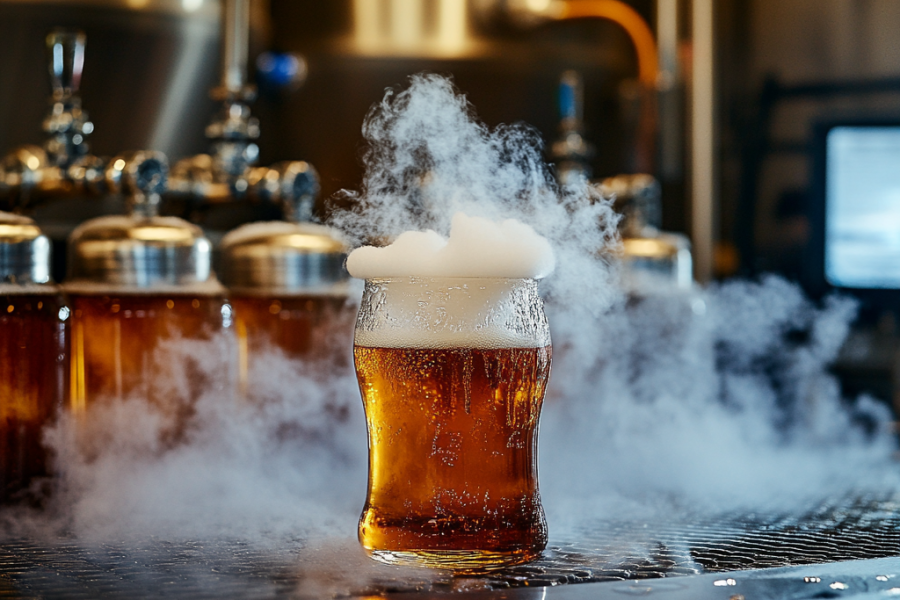
In commercial beverage manufacturing, consistency is everything. Flavor, carbonation levels, shelf stability, and product safety must be tightly controlled across every batch. While ingredients like water, sugar, and flavoring receive careful attention, one critical input is often underestimated—CO₂.
For high-volume beverage production, CO₂ is not just a processing gas. It directly affects product quality, safety, and compliance. The difference between standard CO₂ and high-purity, beverage-grade CO₂ can have measurable impacts on both the final product and the manufacturing process.
This is why large-scale beverage manufacturers increasingly prioritize working with reliable, high-purity CO₂ suppliers like A+ Heler’s Dry Ice & CO₂, rather than treating CO₂ as a commodity.
CO₂’s Role in Beverage Manufacturing
CO₂ is fundamental to beverage production across multiple categories, including:
- Carbonated soft drinks
- Sparkling water
- Kombucha and functional beverages
- Beer and alcoholic beverages
- Ready-to-drink packaged products
Its primary role is carbonation, but CO₂ also supports:
- Oxygen displacement during packaging
- Product preservation
- Pressure control during processing
- Tank purging and system sanitation
Because CO₂ interacts directly with the product, its quality directly affects what reaches the consumer.
Manufacturers evaluating CO₂ sourcing often begin by reviewing core CO₂ supply options to understand how purity standards differ between suppliers.
What “High-Purity” CO₂ Actually Means
Not all CO₂ is created equal. Industrial-grade CO₂ may be suitable for certain applications, but beverage manufacturing requires a higher standard.
High-purity, beverage-grade CO₂ is processed and tested to meet stricter specifications, including:
- Lower levels of contaminants
- Reduced presence of hydrocarbons and impurities
- Consistent composition across batches
- Compliance with food and beverage standards
These differences are not theoretical—they directly affect taste, safety, and consistency.
A+ Heler’s provides high-purity CO₂ that exceeds standard food-grade expectations, ensuring that commercial beverage manufacturers maintain control over product quality at scale.
How CO₂ Purity Affects Taste and Product Quality
Even trace contaminants in CO₂ can impact beverage flavor. Off-tastes, inconsistencies between batches, and subtle quality issues often trace back to gas quality rather than ingredients.
In high-volume production, these issues become amplified. A small inconsistency in CO₂ purity can affect thousands of units.
Common risks associated with lower-purity CO₂ include:
- Altered flavor profiles
- Inconsistent carbonation levels
- Reduced product shelf life
- Increased quality control failures
Beverage manufacturers operating at scale cannot afford variability. High-purity CO₂ ensures that carbonation remains consistent across production runs.
Facilities producing at volume often align with commercial-scale CO₂ services to maintain uniformity across batches.
Oxygen Control and Product Stability
Beyond carbonation, CO₂ plays a critical role in oxygen management. Oxygen exposure is one of the primary causes of product degradation in beverages.
CO₂ is commonly used to:
- Purge tanks and lines before filling
- Displace oxygen in packaging
- Maintain product stability during storage
If CO₂ contains impurities, it may introduce unwanted compounds into the system or reduce effectiveness in oxygen displacement.
High-purity CO₂ ensures that oxygen control processes remain effective, protecting both product quality and shelf life.
For manufacturers managing large-scale production, consistent oxygen control is essential to maintaining brand integrity.
Compliance and Regulatory Considerations
Beverage manufacturing is subject to strict regulatory standards. CO₂ used in production must meet food safety requirements and support compliance with industry guidelines.
Using lower-grade or inconsistent CO₂ can create compliance risks, including:
- Failed audits
- Product recalls
- Documentation discrepancies
- Increased regulatory scrutiny
A+ Heler’s supports commercial beverage manufacturers with consistent, high-purity CO₂ and documented processes that align with regulated environments.
Facilities often review available certifications and operational standards when selecting a supplier to ensure compliance requirements are met.
For procurement teams, supplier documentation is just as important as product quality.
Consistency Across High-Volume Production
Large beverage manufacturers often operate multiple production lines or facilities. Maintaining consistency across these environments requires standardized inputs—including CO₂.
Inconsistent CO₂ supply can lead to:
- Variation between production lines
- Increased quality control adjustments
- Higher rejection rates
- Operational inefficiencies
A+ Heler’s supports multi-facility operations by providing consistent, high-purity CO₂ across commercial customers. Their refill-based model ensures that supply remains predictable and aligned with production schedules.
Companies scaling beverage production often review broader industry applications to understand how CO₂ consistency impacts operations across facilities.
The Importance of Reliable Refill-Based Supply
Unlike delivered bulk systems, A+ Heler’s operates on a refill-based CO₂ model. For many commercial beverage manufacturers, this approach offers greater control and flexibility.
Benefits of refill-based supply include:
- Predictable cylinder rotation
- Reduced dependency on delivery schedules
- Greater control over inventory levels
- Faster turnaround for high-demand periods
For high-volume operations, refill timing becomes critical. Running out of CO₂ mid-production can halt entire lines.
A+ Heler’s works with commercial clients to align refill schedules with production needs, ensuring that supply remains consistent without overstocking or unnecessary downtime.
Supporting Continuous Production Environments
Many beverage facilities operate continuously, with production running across multiple shifts. In these environments, CO₂ supply must match the pace of operations.
Challenges include:
- Overnight production demand
- Variable usage across shifts
- Emergency refill needs
- Coordination between teams
A+ Heler’s supports continuous operations by providing local, reliable access to high-purity CO₂. Their Madison-based operation allows for responsive service that aligns with real-world production demands.
Facilities that rely on continuous production often integrate CO₂ supply planning into broader operational workflows, ensuring availability at all times.
Safety Considerations in Beverage Manufacturing
While CO₂ is essential to beverage production, it must be handled safely. High concentrations can displace oxygen, creating hazards in enclosed environments.
Beverage facilities must ensure:
- Proper ventilation
- CO₂ monitoring systems
- Employee training
- Safe storage and handling procedures
A+ Heler’s provides access to detailed safety information to support safe integration of CO₂ into commercial operations.
Consistency in safety practices is critical, especially in facilities operating across multiple shifts or locations.
Why Supplier Choice Impacts More Than Cost
For procurement teams, CO₂ may appear interchangeable across suppliers. In practice, supplier choice affects:
- Product quality
- Operational efficiency
- Compliance readiness
- Production uptime
National suppliers may offer broad coverage, but they often lack the responsiveness and production transparency required for high-volume beverage manufacturing.
A+ Heler’s local production model ensures:
- Consistent purity
- Faster access
- Reduced supply variability
- Stronger communication
For operations leaders, these factors often outweigh marginal cost differences.
Building CO₂ Into Production Infrastructure
High-purity CO₂ is not just an input—it is part of production infrastructure. Treating it as such improves:
- Forecasting accuracy
- Production consistency
- Risk management
- Supplier alignment
Beverage manufacturers that integrate CO₂ planning into infrastructure decisions reduce variability and strengthen operational control.
A+ Heler’s supports this approach by working directly with commercial clients to align supply with real production demands.
Talk to a Local Expert About Your CO₂ Supply
If your beverage manufacturing operation depends on consistent carbonation, oxygen control, and product stability, CO₂ purity cannot be overlooked.
A+ Heler’s Dry Ice & CO₂ provides high-purity CO₂ designed for commercial-scale beverage production. Their refill-based model, local production, and focus on reliability make them a trusted partner for manufacturers that require consistency at scale.
Before inconsistencies impact product quality or production timelines, speak with a local expert. Many facilities begin by initiating a conversation through Get a Quote to align CO₂ supply with operational requirements.
When purity matters—and in beverage manufacturing, it always does—working with the right supplier makes all the difference.
