
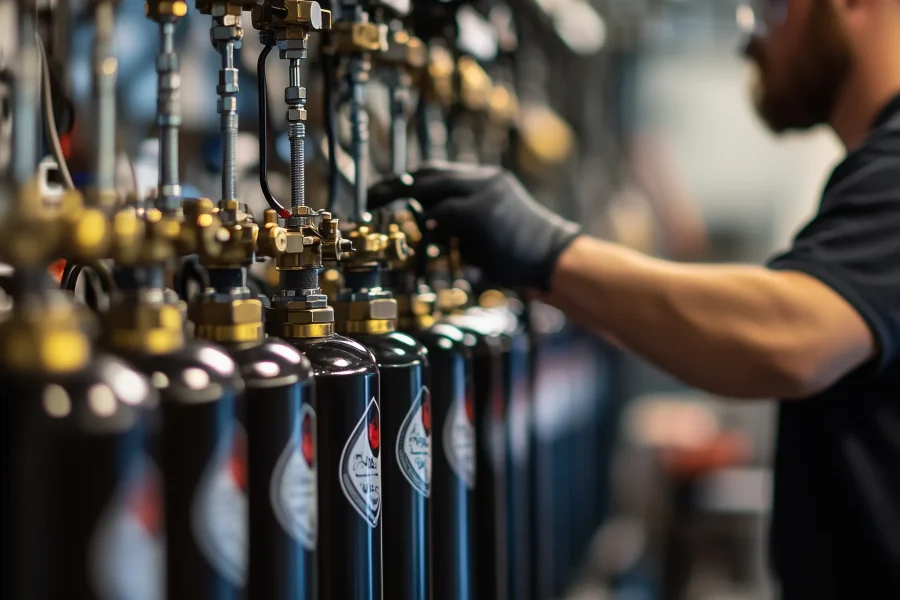
Carbon dioxide (CO2) cylinders are essential for many industries, from craft brewing and beverage carbonation to laboratories, greenhouses, and specialty food production. CO₂ is a versatile, non-flammable gas, but improper handling or storage of cylinders can pose serious safety risks, including asphyxiation, cylinder damage, or accidental release. Understanding how to safely handle, transport, and store CO₂ cylinders is critical for small businesses, labs, and any operation that relies on pressurized gas.
At A+ Heler’s, we supply high-quality, beverage grade CO₂ to craft breweries, beverage companies, and other small businesses. Our clients depend on us not only for the purity of the gas but also for guidance on safe practices. This guide explores essential safety measures, proper storage techniques, and tips for handling CO₂ cylinders to ensure your operations remain safe and compliant.
Understanding CO₂ Cylinders
CO₂ cylinders are typically made of steel or aluminum and designed to hold gas at high pressure. They come in a range of sizes, from small 5-pound cylinders for beverage taps to large industrial tanks for greenhouses or laboratories. The gas inside is stored either as a liquid under pressure or as compressed gas, depending on the cylinder type.
Because CO₂ is heavier than air, leaks can accumulate near the floor, creating a risk of oxygen displacement. While CO₂ is non-flammable, uncontrolled release can be dangerous. For these reasons, proper handling, storage, and monitoring are crucial.
Key Safety Considerations
1. Ventilation:
CO₂ is an asphyxiant; in confined spaces, it can displace oxygen and pose a suffocation hazard. Cylinders should always be stored in well-ventilated areas. Avoid basements, small enclosed rooms, or spaces without airflow. Using CO₂ monitors in storage and operational areas can provide an added layer of safety, alerting staff if concentrations reach dangerous levels.
2. Secure Storage:
Cylinders must be secured to prevent tipping, rolling, or falling. Use wall-mounted brackets, chains, or cylinder racks to hold cylinders upright at all times. A falling cylinder can damage the valve or regulator, causing uncontrolled gas release and potential injury.
3. Temperature Control:
CO₂ cylinders should be stored in cool, dry areas away from direct sunlight, heat sources, or flammable materials. High temperatures can increase internal pressure, which may trigger relief valves or compromise the cylinder’s integrity. Do not store cylinders near heaters, ovens, or direct sunlight.
4. Proper Labeling and Identification:
Ensure each cylinder is clearly labeled with its contents and hazard information. Do not use cylinders with missing or illegible labels. beverage -grade CO₂ cylinders should be identified separately to avoid contamination with industrial gases.
5. Valve Protection:
The valve is the most sensitive part of a CO₂ cylinder. Always keep valve caps or protective guards in place when cylinders are not in use. Never tamper with or remove safety devices.
6. Transport Safety:
When moving cylinders, use a cylinder cart or dolly designed for high-pressure tanks. Keep cylinders upright and secure them with straps or chains. Avoid dragging, sliding, or rolling them on their sides. During transport in vehicles, secure cylinders to prevent tipping and ensure adequate ventilation.
Handling CO₂ Cylinders
1. Inspect Before Use:
Before connecting a cylinder to any system, inspect it for visible damage, rust, or corrosion. Check the valve and regulator for proper function. If the cylinder appears damaged, do not use it and contact your supplier for guidance.
2. Use Proper Regulators and Equipment:
CO₂ cylinders must be paired with regulators designed for the specific pressure and volume of the cylinder. Never attempt to force a cylinder connection using incompatible fittings or adapters. Regulators help control the flow of gas safely and prevent over-pressurization.
3. Avoid Rapid Release:
Opening a cylinder valve too quickly can cause a rapid pressure drop and extreme cold at the valve outlet, which may cause frostbite. Open valves slowly and follow manufacturer instructions.
4. Personal Protective Equipment (PPE):
When handling CO₂ cylinders, wear gloves and safety glasses to prevent cold burns or frostbite. Avoid direct contact with liquid CO₂, as it can freeze skin almost instantly.
Storage Best Practices
1. Upright and Secured:
Always store CO₂ cylinders upright, with protective valve caps in place. Secure them with chains, straps, or racks to prevent falling.
2. Separate Full and Empty Cylinders:
Mark cylinders as full or empty and store them separately. This prevents confusion and ensures accurate inventory tracking.
3. Avoid Confined Spaces:
Never store CO₂ cylinders in small enclosed areas or rooms without proper ventilation. Leaks can create dangerous conditions quickly.
4. Temperature and Humidity:
Keep storage areas cool and dry. High heat increases internal cylinder pressure and may trigger safety relief valves. Excessive humidity can cause corrosion over time.
5. Proximity to Work Areas:
Store cylinders close to the point of use to reduce handling, but not in areas where they can be struck, knocked over, or exposed to heat.
Emergency Procedures
Even with proper handling, accidents can happen. Having clear emergency procedures is essential:
- Leaks: If you suspect a CO₂ leak, evacuate the area immediately. Ventilate if possible and call emergency services if needed. Do not attempt to repair the cylinder yourself.
- Frostbite: If liquid CO₂ comes in contact with skin, immediately warm the affected area with lukewarm water. Do not rub or use hot water.
- Fire or Heat Exposure: Although CO₂ is non-flammable, extreme heat can cause cylinders to rupture. Evacuate the area and call emergency responders if a cylinder is exposed to fire.
Regulatory Compliance
Businesses handling CO₂ cylinders must comply with local, state, and federal regulations regarding pressurized gas storage and transportation. Key standards include:
- Occupational Safety and Health Administration (OSHA): Guidelines for handling compressed gases safely.
- Department of Transportation (DOT): Regulations for transporting pressurized cylinders.
- Food Safety Standards: For beverage -grade CO₂, ensure cylinders are clearly labeled and stored separately from industrial gases.
Following these regulations helps ensure workplace safety and legal compliance.
Best Practices for Small Businesses and Labs
Small businesses and labs often rely on CO₂ cylinders for multiple applications, from craft beverage carbonation to greenhouse growth enhancement. For these operations:
- Maintain a regular inspection schedule for all cylinders and regulators.
- Train staff in safe handling techniques and emergency procedures.
- Keep inventory logs to track full and empty cylinders.
- Coordinate with a trusted supplier like A+ Heler’s for timely refills and replacements.
These practices reduce the risk of accidents, prevent downtime, and ensure a steady CO₂ supply for ongoing operations.
Choosing a Reliable CO₂ Supplier
Having a trusted local supplier makes a huge difference. A+ Heler’s provides beverage-grade CO₂, timely delivery, and expert guidance on safe handling and storage. Our team helps small businesses, labs, and greenhouses select the right cylinder sizes, manage inventory, and comply with safety standards.
By working with a supplier who understands your specific application, you can avoid common issues such as improper cylinder use, lost product, or operational delays.
Conclusion
CO₂ cylinders are vital for many industries, but safety must always come first. Proper handling, storage, and adherence to best practices prevent accidents and ensure your operations run smoothly. Key points to remember include:
- Store cylinders upright, secured, and in ventilated areas.
- Use the correct regulators and fittings for each cylinder.
- Inspect cylinders regularly for damage or wear.
- Train staff on safe handling and emergency procedures.
- Work with a reliable supplier like A+ Heler’s for consistent quality and guidance.
Following these guidelines helps small businesses, labs, and other operations safely take full advantage of CO₂ cylinders for beverage carbonation, greenhouse yield enhancement, and laboratory applications.
With the right precautions and a trusted supplier, CO₂ cylinders can be used safely and efficiently to support your business, protect your team, and maintain high-quality operations.
